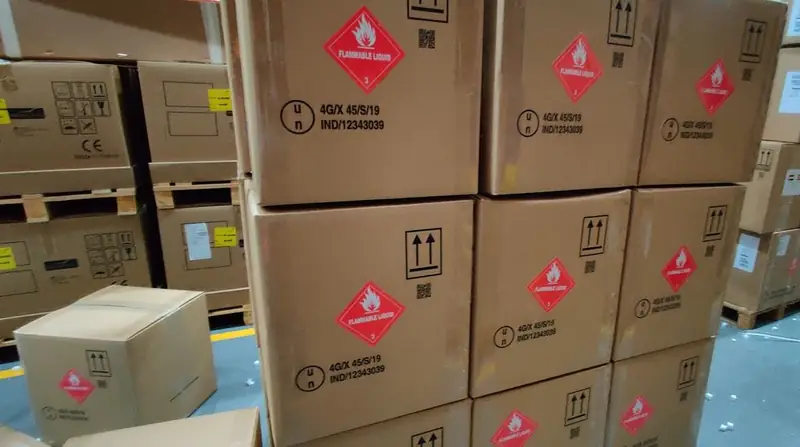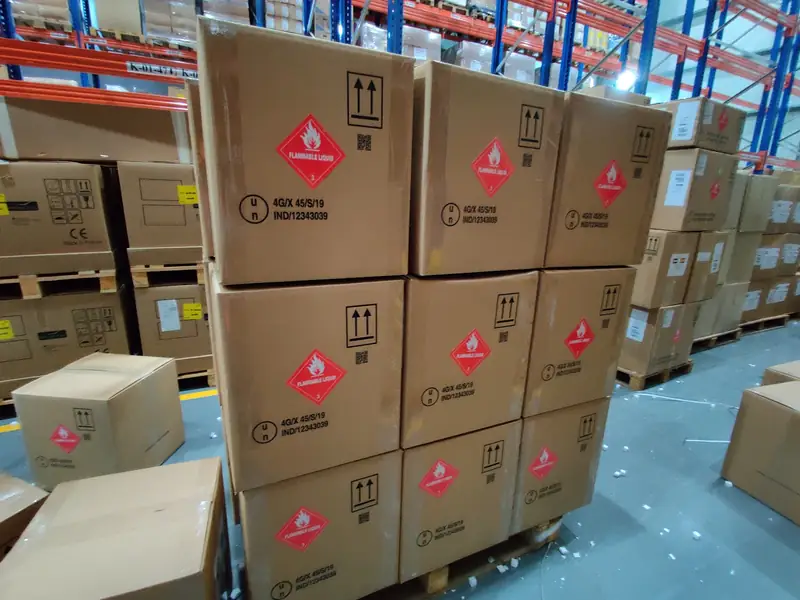
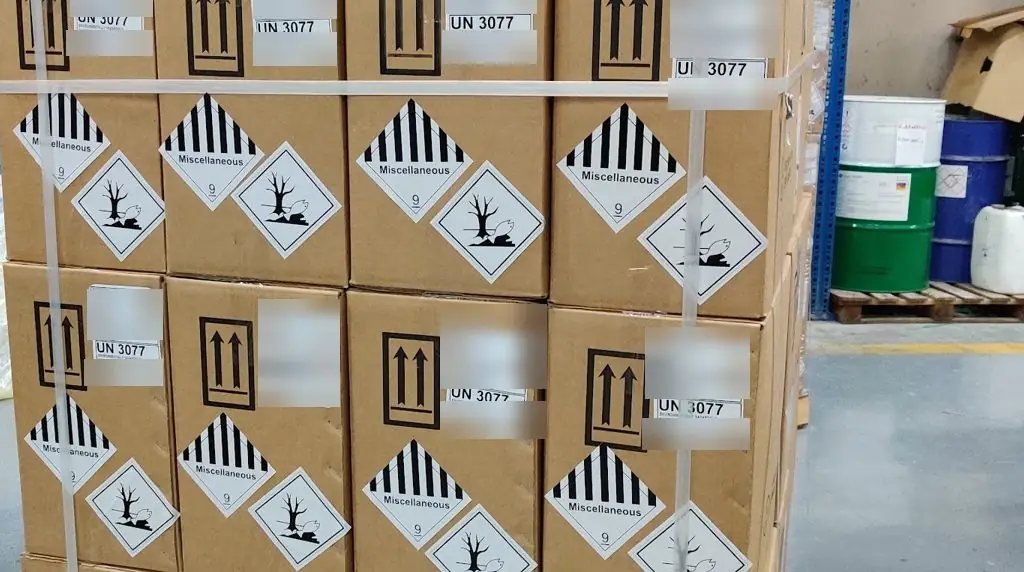
The 2027 IATA Dangerous Goods Regulations, the 68th edition, take effect on 1 January 2027. The main changes for cargo are battery rules, four new UN numbers, amended packing instructions and clearer marking of overpacks. Airlift Logistics, a freight forwarder in Dubai Airport Free Zone, sets out what UAE shippers should check before the first flight of January.
When does the 68th edition start?
It applies from 1 January 2027 and replaces the 67th edition. IATA says it includes the changes in the 2027–2028 ICAO Technical Instructions, plus those adopted by its own Dangerous Goods Board, in its list of significant changes. In the UAE, aviation is regulated by the General Civil Aviation Authority. Cargo prepared in December that flies in January should be checked against the new edition.
What changes, at a glance
| Area | What the 68th edition says | Who should check |
|---|---|---|
| Battery mark | The version with a phone number is phased out | Anyone using old printed marks |
| Sodium ion batteries | Added across many packing instructions | Battery, energy storage and device shippers |
| Hybrid batteries | New classification paragraph and special provision A235 | Packs mixing lithium ion and sodium ion cells |
| New UN numbers | UN3561, UN3562, UN3563 and UN3564 | Chemical and battery system shippers |
| Overpacks | Clearer note on which marks to repeat, with an example | Anyone shrink-wrapping DG on a pallet |
| Aerosols | Amended subsidiary hazard rules and extra prohibitions | Cosmetics, paint and cleaning product shippers |
| Engines and vehicles | Packing instructions 220, 378, 950, 951, 952 and 972 amended | Car, engine and machinery shippers |
| State variations | New or notable changes for 17 States | Check the destination, transit and airline |
A summary, not the regulations. IATA itself says its list is not exhaustive. Use the full 68th edition, and the airline's own variations, to prepare a shipment.
What happens to the old battery mark?
The old battery mark had space for a phone number. US trainer Lion Technology reports that its transition period ends on 31 December 2026. IATA's list is softer on one point: it treats the number as additional information, says this should not be the sole reason to reject a package, and encourages shippers to source the current mark.
Placement is clearer too. When a package needs the battery mark and other hazard labels, the mark goes on the same surface as those labels. UN numbers and Section II limits are in our lithium battery shipping guide.
Sodium ion and hybrid batteries
Many of the packing instruction changes add sodium ion batteries or revise the text on prototype batteries. A new paragraph, 3.9.2.6.1(h), covers hybrid batteries with both lithium ion and sodium ion cells, supported by special provision A235. Ask the maker which cells are inside before you book: "battery pack" on an invoice does not say.
A small but useful change helps device shippers. For Section II packages under packing instructions 967, 970 and 978 with no more than 4 cells or 2 batteries, button cells in the equipment do not count towards that limit.
Which UN numbers are new?
| UN number | Proper shipping name |
|---|---|
| UN3561 | Chlorophenols, corrosive, toxic, solid, n.o.s. |
| UN3562 | Chlorophenols, corrosive, solid, n.o.s. |
| UN3563 | Lithium metal batteries installed in cargo transport unit |
| UN3564 | Sodium ion batteries installed in cargo transport unit |
Entries that have been phased out stay on the list for two years, linked to the new special provision A808. If your safety data sheet shows an older UN number or name, ask the manufacturer for an updated sheet. The Shipper's Declaration must use the current entry.
Overpacks, aerosols and country codes
- Overpacks: the rules do not require every mark on the inner packages to be copied onto the overpack. The note is clarified and an example added. See DG marks and labels.
- Aerosols: check the subsidiary hazard again before shipping. Perfume is usually UN1266 rather than an aerosol, as our perfume shipping guide explains.
- Country codes: the State variation codes for Argentina, the Philippines, Sri Lanka and Ukraine now match their ISO codes: ARG, PHL, LKA and UKR.
Checklist for UAE shippers before 1 January 2027
- List your DG products by UN number and confirm each entry in the 68th edition.
- Replace battery marks that still have a phone number.
- Ask battery suppliers whether packs are lithium ion, sodium ion or hybrid.
- Request a current safety data sheet for chemicals and aerosols.
- Check the State and airline variations for the whole route.
- Confirm that the person signing the Shipper's Declaration has current training.
The full text is sold by IATA on its Dangerous Goods Regulations page. To have a consignment checked before it flies, see dangerous goods handling and shipping in Dubai or our air freight services.
Quick answers
What does DGR stand for?
DGR stands for Dangerous Goods Regulations, the manual published by IATA. Airlines, forwarders, ground handlers and shippers use it to classify, pack, mark, label and document dangerous goods for air transport. It is based on the ICAO Technical Instructions and a new edition comes out every year.
- The 68th edition applies from 1 January 2027.
- Sea freight follows the IMDG Code instead.
What is DGR certification?
It is proof that a person has completed dangerous goods training. The training must match the job, such as packing, signing declarations or accepting cargo. Recurrent training is normally needed within 24 months, so check the date on the certificate before that person signs for a January shipment.
- Training follows the person's function.
- Ask who signs your declarations.
What are the IATA shipping requirements for dangerous goods?
Dangerous goods must be classified, packed, marked, labelled and documented correctly. The shipper finds the UN number, follows its packing instruction, applies the marks and hazard labels, and completes a declaration when one is required. The airline then checks the consignment against the rules and its own variations.
- Some goods are forbidden on passenger aircraft.
- Some goods are forbidden by air entirely.
Sources: IATA: Significant changes in the 68th edition DGR (PDF), IATA Dangerous Goods Regulations, Lion Technology: 2027 IATA DGR updates, UAE General Civil Aviation Authority. How we check our content.
Related service: dangerous goods handling and shipping in DubaiGet a quoteWhatsApp us