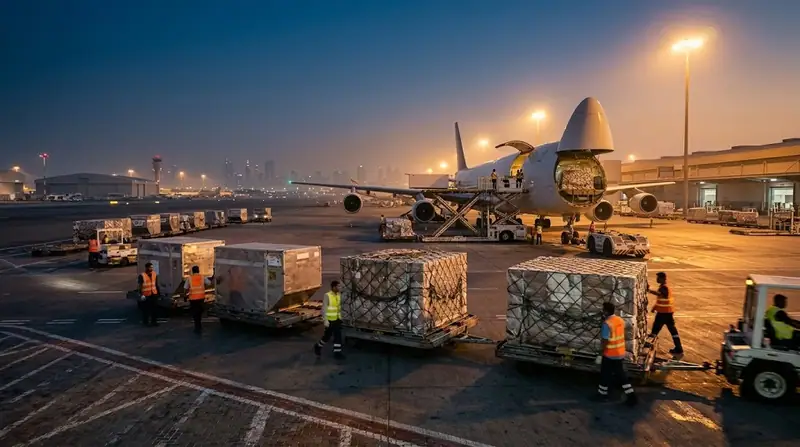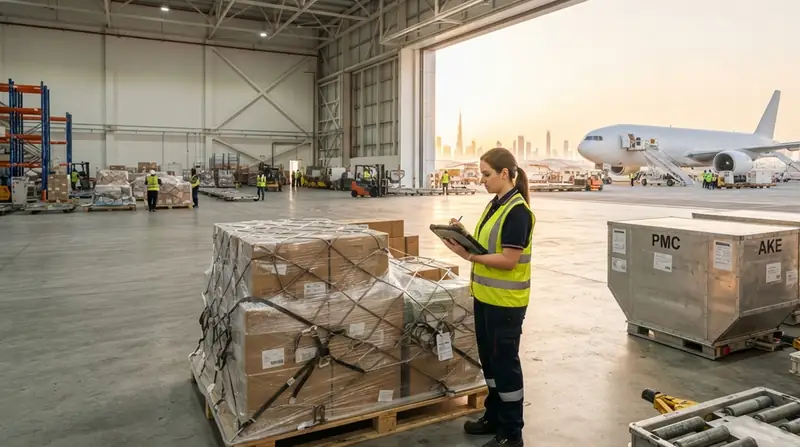
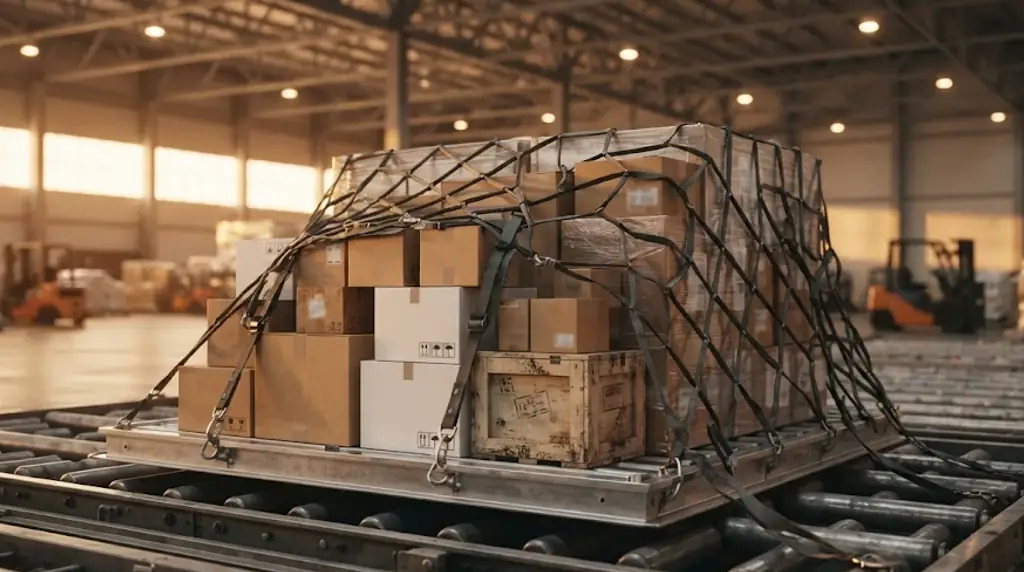
Air freight consolidation means a forwarder groups cargo from several shippers into one shipment on one master air waybill, then splits it again at destination. Each shipper gets a house air waybill and pays a lower rate per kg than booking alone. Airlift Logistics, an air cargo forwarder in Dubai Airport Free Zone, explains how it works, what it costs in time, and when a direct booking is better.
How does air consolidation work?
- Each shipper delivers cargo to the forwarder's warehouse, with its own invoice and packing list.
- The forwarder issues a house air waybill (HAWB) for each shipment.
- The shipments are built up together on air cargo pallets or containers.
- The airline issues one master air waybill (MAWB) for the whole consolidation.
- At destination, the forwarder's agent breaks it down and releases each HAWB to its consignee.
Master and house air waybills
| Point | Master air waybill (MAWB) | House air waybill (HAWB) |
|---|---|---|
| Issued by | The airline, or the forwarder on its behalf | The forwarder |
| Shipper named | The forwarder | The actual shipper |
| Consignee named | The forwarder's destination agent | The actual buyer |
| Number format | Airline prefix plus 8 digits, such as 176 for Emirates | The forwarder's own format |
| Used to track | The flight, on the airline's site | Your shipment, with the forwarder |
Both numbers work on our cargo tracking page for shipments we handle. More on the paper itself in our air waybill guide.
Consolidated or direct: a side-by-side view
| Point | Consolidated | Direct (one shipper, one MAWB) |
|---|---|---|
| Rate per kg | Lower, because the forwarder buys space at a higher weight break | Higher for small shipments |
| Timing | May wait for the next consolidation departure | Flies on the first confirmed flight |
| Best for | Small and medium shipments that are not urgent | Urgent, large, high-value or dangerous goods cargo |
| Paperwork | HAWB for you, MAWB for the whole load | One MAWB naming you as shipper |
Why consolidation lowers the price
Airlines sell space in weight breaks: a minimum charge, then lower rates per kg from 45 kg, 100 kg, 300 kg, 500 kg and 1,000 kg. A 60 kg shipment alone pays the +45 kg rate. Combined with other shippers' cargo into 1,000 kg, it travels at a much lower rate, and the forwarder shares part of that saving. The airline still bills on , so bulky light cargo saves less.
What cannot travel in a consolidation?
Each forwarder sets its own limits. Many keep dangerous goods, valuables, live animals and temperature-controlled cargo out of general consolidations, because they need separate handling, documents or aircraft. Ask before booking, and declare everything on the packing list.
For a rate on your next shipment, see our air freight services in Dubai.
Quick answers
What is air consolidation?
It is one airline shipment made of several shippers' cargo. A forwarder books space under one master air waybill and fills it with smaller shipments, each with its own house air waybill. The airline treats the load as one consignment. At destination, an agent splits it and releases each part to its own consignee.
- Also called groupage or a consol.
- Cheaper per kg than booking alone.
What is the difference between LCL and consolidation shipments?
LCL is sea freight; consolidation is the wider idea. LCL, or less than container load, means your cargo shares a container with other shippers' goods. Air consolidation does the same on a flight, sharing airline space under one master air waybill. Both lower the cost of small shipments, but air arrives days sooner than sea.
- See LCL shipping from Dubai.
- For urgent cargo, ask for a direct booking.
Sources: IATA air cargo. How we check our content.
Related service: air freight services in DubaiGet a quoteWhatsApp us